Showing posts with label Climate Change. Show all posts

Friday, October 30, 2020

Evidence suggests more mega-droughts are coming


Mega-droughts—droughts that last two decades or longer—are tipped to increase thanks to climate change, according to University of Queensland-led research.


Evidence suggests more mega-droughts are coming
Credit: University of Queensland

UQ's Professor Hamish McGowan said the findings suggested climate change would lead to increased water scarcity, reduced winter snow cover, more frequent bushfires and wind erosion. The revelation came after an analysis of geological records from the Eemian Period—129,000 to 116,000 years ago—which offered a proxy of what we could expect in a hotter, drier world.


"We found that, in the past, a similar amount of warming has been associated with mega-drought conditions all over south eastern Australia," Professor McGowan said. "These drier conditions prevailed for centuries, sometimes for more than 1000 years, with El Nino events most likely increasing their severity."


The team engaged in paleoclimatology—the study of past climates—to see what the world will look like as a result of global warming over the next 20 to 50 years.


"The Eemian Period is the most recent in Earth's history when global temperatures were similar, or possibly slightly warmer than present," Professor McGowan said. "The 'warmth' of that period was in response to orbital forcing, the effect on climate of slow changes in the tilt of the Earth's axis and shape of the Earth's orbit around the sun. In modern times, heating is being caused by high concentrations of greenhouse gasses, though this period is still a good analog for our current-to-near-future climate predictions."


Researchers worked with the New South Wales Parks and Wildlife service to identify stalagmites in the Yarrangobilly Caves in the northern section of Kosciuszko National Park. 


Small samples of the calcium carbonate powder contained within the stalagmites were collected, then analyzed and dated at UQ. That analysis allowed the team to identify periods of significantly reduced precipitation during the Eemian Period.


"They're alarming findings, in a long list of alarming findings that climate scientists have released over the last few decades," Professor McGowan said. "We hope that this new research allows for new insights to our future climate and the risks it may bring, such as drought and associated bushfires. But, importantly, if humans continue to warm the planet, this is the future we may all be looking at."


The study was published in Scientific Reports.


Source: University of Queensland [October 30, 2020]


Support The Archaeology News Network with a small donation!


Wednesday, October 28, 2020

Leaving more big fish in the sea reduces CO2 emissions


An international team of scientists has found leaving more big fish in the sea reduces the amount of carbon dioxide (CO2) released into the Earth's atmosphere.


Leaving more big fish in the sea reduces CO2 emissions
Leaving more big fish in the sea--especially where fishing is not economically profitable in the
Central Pacific, South Atlantic, and North Indian Oceans --reduces the amount of
carbon dioxide (CO2) released into the Earth's atmosphere [Credit: Enric Sala]

When a fish dies in the ocean it sinks to the depths, sequestrating all the carbon it contains with it. This is a form of 'blue carbon'--carbon captured and stored by the world's ocean and coastal ecosystems.


"But when a fish is caught, the carbon it contains is partly emitted into the atmosphere as CO2 a few days or weeks after," said Gael Mariani, a PhD student at the University of Montpellier in France.


Mr Mariani led a world-first study showing how ocean fisheries have released at least 730 million metric tons of CO2 into the atmosphere since 1950. An estimated 20.4 million metric tons of CO2 was emitted in 2014--equivalent to the annual emissions of 4.5 million cars.


Co-author Professor David Mouillot from the ARC Centre of Excellence for Coral Reef Studies at James Cook University (CoralCoE at JCU) and the University of Montpellier said the carbon footprint of fisheries is 25 percent higher than previous industry estimates.


"Fishing boats produce greenhouse gases by consuming fuel," Prof Mouillot said. "And now we know that extracting fish releases additional CO2 that would otherwise remain captive in the ocean."


Large fish such as tuna, sharks, mackerel and swordfish are about 10 to 15 percent carbon.


"When these fish die, they sink rapidly," Prof Mouillot said. "As a result, most of the carbon they contain is sequestered at the bottom of the sea for thousands or even millions of years. They are therefore carbon sinks--the size of which has never been estimated before."


He says this natural phenomenon--a blue carbon pump--has been increasingly and greatly disrupted by industrial fishing.


The authors also say the phenomenon has not only been overlooked until now, but it happens in areas where fishing is not economically profitable: in the Central Pacific, South Atlantic, and North Indian Oceans.


"Fishing boats sometimes go to very remote areas--with enormous fuel consumption--even though the fish caught in these areas are not profitable and fishing is only viable thanks to subsidies," Mr Mariani said.


For the authors of the study, the new data strongly supports more reasoned fishing.


"The annihilation of the blue carbon pump represented by large fish suggests new protection and management measures must be put in place, so that more large fish can remain a carbon sink and no longer become an additional CO2 source," Mr Mariani said. "And in doing so we further reduce CO2 emissions by burning less fuel."


"We need to fish better," Prof Mouillot said.


The study is published in Science Advances.


Source: ARC Centre of Excellence for Coral Reef Studies [October 28, 2020]


Support The Archaeology News Network with a small donation!


Tuesday, October 27, 2020

Coastal Greenland reshaped as ice sheet mass loss accelerates


Ice loss from the Greenland Ice Sheet has accelerated significantly over the past two decades, transforming the shape of the ice sheet edge and therefore coastal Greenland, according to scientific research led by Twila Moon, deputy lead scientist of the National Snow and Ice Data Center. These changes to the ice sheet could have far-reaching impacts on ecosystems and communities, as the flow of water under the ice sheet as well as nutrient and sediment flow are altered. 


Coastal Greenland reshaped as ice sheet mass loss accelerates
Greenland Ice Sheet [Credit: Hannes Grobe, Alfred Wegener Institute
for Polar and Marine Research]

"The speed of ice loss in Greenland is stunning," said Moon. "We can now see many signs of a transformed landscape from space. And as the ice sheet edge responds to rapid ice loss, the character and behavior of the system as a whole is changing, with the potential to influence ecosystems and people who depend on them."


The researchers compiled data from NASA, the United States Geological Survey, and other satellites from 1985 to 2015 to compare ice edge position, ice sheet surface elevation, and glacier flow over three decades. Advancements in satellite technology allowed them to observe the changes to the ice sheet in much greater detail than was possible in the past. Much of the data used was from the NASA Inter-mission Time Series of Land Ice Velocity and Elevation (ITS_LIVE) project, which facilitates ice sheet, ice shelf, and glacier research by providing a global record of land ice velocity and elevation derived from nearly three decades of satellite observations.


Using these comparisons, the researchers developed a few key findings. The most consistent trend, found across the entire ice sheet, is widespread ice edge retreat. While there is a range of behavior among glaciers across the ice sheet, there is a noticeable lack of sustained ocean-connected glacier advance. Out of 225 ocean-connected glaciers that were measured, none have substantially advanced while 200 have retreated, particularly since 2000. This is notable even in regions dominated by slower-moving glaciers and cooler ocean water, such as the northern and northeastern regions of the ice sheet. In addition, while the vast majority of glaciers are retreating, ice flow response on those glaciers, such as speeding up or slowing down, is affected in large part by topography and upstream factors. This includes the slope of the landscape and the presence and shape of bedrock and sediments underneath the glacier. Therefore, even glaciers within the same regional or local area can behave differently.


As the researchers examined changes in the Greenland Ice Sheet, they found that zones of fast glacier flow are narrowing, ice is being rerouted, and in some cases, the flow of new ice to glaciers is slowed, stranding glaciers in place. These processes could have a variety of downstream impacts, such as altering how water moves under the ice sheet, which could affect the availability of water to communities and animals, altering where nutrients and sediment enter the ocean, exposing new land areas, opening new fjord waters, and altering ecosystems and physical landscapes.


"As the Arctic ocean and atmosphere warm, we can clearly see the flow of ice into the ocean accelerate and the ice edge retreat," said Alex Gardner, a research scientist at NASA's Jet Propulsion Laboratory and co-author of the study. "When we look more closely, however, we can see the complexity of how individual glaciers respond, owing to differences in the properties of the ocean water that reach the glacier front, the bedrock and till that lie below, and in how meltwater runoff is routed beneath. Understanding the complexity of individual glacier response is critical to improving projections of ice sheet change and the associated sea level rise that will arrive at our shores."


Results of the research were published in the American Geophysical Union's Journal of Geophysical Research: Earth Surface.


Source: University of Colorado at Boulder [October 27, 2020]


Support The Archaeology News Network with a small donation!


Monday, October 26, 2020

Irregular appearances of glacial and interglacial climate states


During the last 2.6 million years of Earth's climate has altered between glacial and interglacial states. As such, there have been times in which the transition between the two climate states appeared with either regular or irregular periodicity. AWI researcher Peter Kohler has now discovered that the irregular appearance of interglacials has been more frequent than previously thought. His study makes a significant contribution to our understanding of Earth's fundamental climate changes.

Irregular appearances of glacial and interglacial climate states
Credit: Pixabay

In order to understand human beings' role in the development of our current climate, we have to look back a long way, since there has always been climate change - albeit over vastly different timescales than the anthropogenic climate change, which is mainly due to the use of fossil fuels over the past 200 years. Without humans, for millions of years, climate altered between glacial and interglacial states over periods of many thousands of years, mainly because of the Earth's tilt which changes by a few degrees with a periodicity of 41,000 years. 


This in turn changes the angle at which the sun's rays strike Earth - and as such the energy that reaches the planet, especially at high latitudes in summer. However, there is strong evidence that during the course of the last 2.6 million years, interglacials have repeatedly been 'skipped'. The Northern Hemisphere - particularly North America - remained frozen for long periods, despite the angle of the axial tilt changing to such an extent that more solar energy once again reached Earth during the summer, which should have melted the inland ice masses. This means Earth's tilt can't be the sole reason for Earth's climate to alter between glacial and interglacial states.


In order to solve the puzzle, climate researchers are investigating more closely at what points in Earth's history irregularities occurred. Together with colleagues at Utrecht University, physicist Peter Kohler from the Alfred Wegener Institute (AWI) has now made a significant contribution towards providing a clearer picture of the sequence of glacial and interglacial periods over the last 2.6 million years. Until now, experts thought that, especially over the past 1.0 million years, glacial and interglacial periods deviated from their 41,000- year cycle, and that interglacial periods were skipped, as a result of which some glacial periods lasted for 80,0000 or even 120,000 years. "For the period between 2.6 and 1.0 million years ago, it was assumed that the rhythm was 41,000 years," says Peter Kohler. But as his study, which has now been published in the scientific journal Nature Communications, shows, there were also repeated irregularities during the period between 2.6 and 1.0 million years ago.


Kohler's study is particularly interesting because he re-evaluated a well-known dataset that researchers have been using for several years - the LR04 climate dataset - yet arrived at completely different conclusions. This dataset consists of a global evaluation of core samples from deep-sea sediments that are millions of years old, and includes measurements from the ancient shells of microscopic, single-celled marine organisms - foraminifera - that were deposited on the ocean floor. Foraminifera incorporate oxygen from the seawater into their calcium shells. But over millennia, the level of specific oxygen isotopes - oxygen atoms that have differing numbers of neutrons and therefore different masses - varies in seawater.


18O reveals what the world was like in the past


The LR04 dataset contains measurements of the ratio of the heavy oxygen isotope 18O to the lighter 16O. The ratio of 18O/16O stored in the foraminifera's shells depends on the water temperature. But there is also another effect that leads to relatively large amounts of 18O being found in the foraminifera's shells in glacial periods: when, during the course of a glacial period, there is heavy snowfall on land, which leads to the formation of thick ice sheets, the sea level falls - in the period studied, by as much as 120 m. Since 18O is heavier than 16O, water molecules containing this heavy isotope evaporate less readily than molecules containing the lighter isotope. As such, comparatively more 18O remains in the ocean and the 18O content of the foraminifera shells increases. 

Irregular appearances of glacial and interglacial climate states
Aerial view of the Beyond EPICA camp [Credit: Beyond EPICA]

"If you take the LR04 dataset at face value, it means you blur two effects - the influence of ocean temperature and that of land ice, or rather that of sea level change," says Peter Kohler. "This makes statements regarding the alternation of the glacial periods uncertain." And there is an additional factor: climate researchers mainly determine the sequence of glacial periods on the basis of glaciation in the Northern Hemisphere. But using 18O values doesn't allow us to say whether prehistoric glaciation chiefly occurred in the Northern Hemisphere or in Antarctica.


Computer model separates the influencing parameters


In an attempt to solve this problem, Kohler and his team evaluated the LR04 dataset in a completely different way. The data was fed into a computer model that simulates the growth and melting of the large continental ice sheets. What sets it apart: the model is capable of separating the influence of temperature and that of sea level change on the 18O concentration. Furthermore, it can accurately analyse where and when snow falls and the ice increases - more in the Northern Hemisphere or in Antarctica. "Mathematicians call this separation a deconvolution," Kohler explains, "which our model is capable of delivering." 


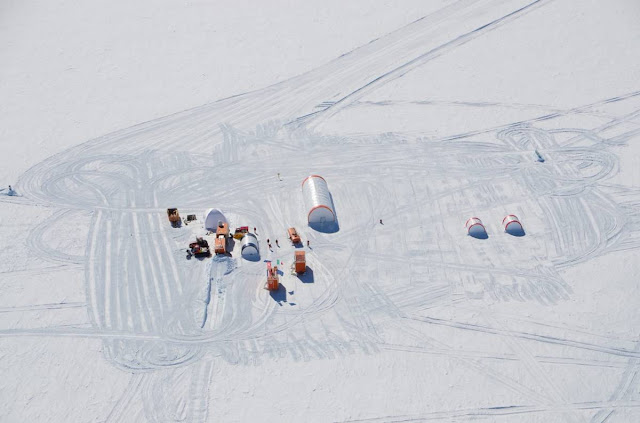
The results show that the sequence of glacials and interglacials was irregular even in the period 2.6 to 1.0 million years ago - a finding that could be crucial in the coming years. As part of the ongoing major EU project 'BE-OIC (Beyond EPICA Oldest Ice Core)', researchers are drilling deeper than ever before into the Antarctic ice. With the oldest ice core recovered to date, 'EPICA', they have 'only' travelled back roughly 800,000 years into the past. 


The ancient ice provides, among other things, information on how much carbon dioxide Earth's atmosphere contained at that time. With 'Beyond EPICA' they will delve circa 1.5 million years into the past. By combining the carbon dioxide measurements with Kohler's analyses, valuable insights can be gained into the relation between these two factors - the fluctuations in the sequence of glacials and the carbon dioxide content of the atmosphere. And this can help us understand the fundamental relationship between greenhouse gases and climate changes in Earth's glacial history.


Source: Alfred Wegener Institute for Polar and Marine Research [October 26, 2020]


Support The Archaeology News Network with a small donation!


The uncertain future of the oceans


The ocean plays a key role in the current climate change, as it absorbs a considerable part of the atmospheric carbon dioxide emitted by mankind. On the one hand, this slows down the heating of the climate, and on the other hand, the dissolution of CO2 in seawater leads to acidification of the oceans. This has far-reaching consequences for many marine organisms and thus also for the oceanic carbon cycle. One of the most important mechanisms in this cycle, is called the biological carbon pump. Part of the biomass that phytoplankton forms in the surface ocean through photosynthesis sinks to the depths in the form of small carbonaceous particles. As a result, the carbon is stored for a long time in the deep sea. The ocean thus acts as a carbon sink in the climate system. How strongly this biological pump acts varies greatly from region to region and depends on the composition of species in the ecosystem.


The uncertain future of the oceans
One of the mesocosm experiments evaluated in the current study took place
in 2010 in Kongsfjord, Spitsbergen [Credit: Kerstin Nachtigall]

The study, which has now been published in the journal Nature Climate Change, is one of the most comprehensive studies so far on the effects of ocean acidification on marine ecosystems. Scientists at the GEOMAR Helmholtz Centre for Ocean Research in Kiel have now been able to show for the first time that ocean acidification influences the carbon content of sinking organic material, and thus the biological pump. Surprisingly, the observed changes were highly variable. The carbon content of sinking particles increased or decreased significantly with increasing CO2, depending on the composition of species and the structure of the food web. Since the underlying data cover a wide range of ocean regions, this seems to be a global phenomenon. These findings allow a completely new assessment of the effects of ocean acidification.


Dr. Jan Taucher, marine biologist and main author of the study, says: "Interestingly, we found that bacterial and animal plankton, such as small crustaceans, play a key role in how the carbon cycle and biological pump respond to ocean acidification. Until now, it has been widely held that biogeochemical changes are mainly driven by reactions of phytoplankton. Therefore, even modern Earth system models do not take into account the interactions we observe between the marine food web and the carbon cycle. Our findings thus help to make climate models more realistic and improve climate projections".


Up to now, most of the knowledge on this topic has been based on idealized laboratory experiments, which only represent ecological interactions and the dynamics of the complex marine food web in a highly simplified way. This makes it difficult to transfer such results to real ocean conditions and project them into the future. In order to gain a more realistic insight, the study summarizes several field experiments that were conducted with large-volume test facilities, so-called mesocosms, in different ocean regions, from arctic to subtropical waters.


Mesocosms are, so to speak, oversized test tubes in the ocean, in which changes in environmental conditions in a closed but otherwise natural ecosystem can be studied. For the present study, a large amount of data from five mesocosm experiments was synthesized to provide a more precise picture of plankton communities and biogeochemical processes within the ecosystem. A total of over ten thousand data points were included in the analysis.


The newly gained knowledge can now be used to implement the complex ecological interactions in Earth system models, thus contributing to further improve climate projections.


Source: GEOMAR Helmholtz Centre for Ocean Research Kiel [October 26, 2020]


Support The Archaeology News Network with a small donation!