Showing posts with label Fossils. Show all posts

Friday, October 30, 2020

The traits of Florisbad skull reinforce the mosaic hypothesis of human evolution


Emiliano Bruner, a paleoneurologist at the Centro Nacional de Investigacion sobre la Evolucion Humana (CENIEH), in collaboration with Marlize Lombard, of the University of Johannesburg, has just published a study in the Journal of Anthropological Sciences which describes the braincase traits of Florisbad, a fossil found in South Africa in 1932, and its similarities with other species like Homo sapiens, H. neanderthalensis and H. heidelbergensis.


The traits of Florisbad skull reinforce the mosaic hypothesis of human evolution
Florisbad skull [Credit: E. Bruner et al. 2020]

The frontal bone of this individual, dated to around 260,000 years ago, has a completely modern shape, which suggests a spatial relationship between face and cranial vault very similar to that of Homo sapiens, although the frontal lobes are particularly broad, like in H. neanderthalensis. Nonetheless, the parietal bone displays an anatomy very similar to more archaic species such as H. heidelbergensis.


"The Florisbad cranium might be key to investigating the origin of our species. It could be from a very early population of Homo sapiens or an extinct group belonging to another independent, parallel human lineage," says Bruner.


Fossils with a mixture of more highly evolved characters in the face and more primitive ones in the posterior regions of the cranium have also been found in Europe and Asia, which corroborates the idea that human evolution did not proceed linearly but mosaically.


Source: CENIEH [October 30, 2020]


Support The Archaeology News Network with a small donation!


Plankton turn hunters to survive dinosaur-killing asteroid impact


New research by an international team of scientists shows how marine organisms were forced to 'reboot' to survive following the asteroid impact 66 million years ago which killed three quarters of life on earth.


Plankton turn hunters to survive dinosaur-killing asteroid impact
High-resolution scanning electron microscope (SEM) images of fossil cell coverings of nannoplankton
 (coccolithophores) highlighting holes that would have allowed flagella and haptonema to emerge
from the cell and draw in food particles (red dots). We have shown a reconstruction
of one of these ancient cells based on living coccolithophores and related algae
[Credit: Paul Bown]

Researchers from the University of Southampton and UCL, along with colleagues in Paris, California, Bristol and Edinburgh used an exceptional record of plankton fossils and eco-evolutionary modelling techniques to examine how organisms behaved before and after this extinction event - and why some survived and some didn't.


The team found that prior to the asteroid impact, species of nannoplankton - microscopic algae - were exclusively reliant on harnessing energy from sunlight (photoautotrophs), but those living afterwards were capable of capturing food and eating it in addition to using photosynthesis to feed (mixotrophs). This suggests the blocking of light from the sun played an important role in killing off some species and over time, encouraging others to evolve and adapt.


The research team's breakthrough came when they found that many of the nannoplankton skeletons (coccospheres) post mass-extinction included a large hole, indicating the position of flagella - tiny tail like structures used by the algae for movement and feeding. This indicates these microscopic organisms, which survived the asteroid strike, were capable of hunting and ingesting food.


"Those species that were lost at the mass extinction show no evidence of a mixotrophic lifestyle and were likely to be completely reliant on sunlight and photosynthesis," explains Dr Samantha Gibbs of the University of Southampton. "Fossils following the Cretaceous-Paleogene (K-Pg) extinction show that mixotrophy dominated and our model indicates this is because of the exceptional abundance of small prey cells - most likely surviving bacteria - and reduced numbers of larger 'grazers' in the post-extinction oceans."


Plankton turn hunters to survive dinosaur-killing asteroid impact
A SEM view of a seafloor after the extinction showing the abundance of these cells with flagellar
 openings. These cells are around 7 microns in diameter (7/1000ths of a millimetre) with
the scale bars next to each image showing the size of a micron (1/1000th mm)
[Credit: Paul Bown]

Opposing evolutionary forces led to the emergence of more diverse feeding strategies and eventually a return to greater reliance on photosynthesis in open ocean nannoplankton. Most nannoplankton today only photosynthesise. So, what caused this devastating mass extinction of photoautotrophs and other species?


The simple answer is a lack of light. The K/Pg event was triggered by an asteroid impact that formed the Chicxulub crater in Mexico, and is well known for the extinction of dinosaurs, plesiosaurs, ammonites and many other groups.


"This huge impact flung vast amounts of debris, aerosols and soot into the atmosphere, causing darkness, cooling and acidification over days and years," says Paul Bown, Professor of Micropalaeontology at UCL. "The significant bias found in the nannoplankton extinctions - removal of open-ocean photoautotrophs but survival of mixotrophs that could hunt and feed - can only be fully explained by the darkness caused by the asteroid impact acting as a kill mechanism."


Plankton turn hunters to survive dinosaur-killing asteroid impact
Graphic explaining the research method and findings
[Credit: Gibbs et al., 2020]

Samantha Gibbs adds: "This 'blackout' or shutdown of primary productivity would have been felt across all of Earth's ecosystems and reveals that the K/Pg event is distinct from all other mass extinctions that have shaped the history of life, both in its rapidity, related to an instantaneous impact event, and its darkness kill mechanism, which shook the foundations of the food chains. The K/Pg boundary event likely represents the only truly geologically instantaneous mass extinction event."


Findings are published in the journal Science Advances.


Source: University of South Hampton [October 30, 2020]


Support The Archaeology News Network with a small donation!


Thursday, October 29, 2020

Pterosaurs undergo dental examination to reveal clues about diets and lifestyles


Microscopic analysis of the teeth of pterosaurs has revealed new insights into the diets and behaviours of Earth's earliest flying reptiles.


Pterosaurs undergo dental examination to reveal clues about diets and lifestyles
Credit: University of Birmingham

Researchers at the University of Leicester's Centre for Palaeobiology Research and the University of Birmingham used dental microwear analysis to look at the wear patterns still visible on the teeth of 17 different species of pterosaur. They compared these with similar patterns on the teeth of modern reptiles, including monitor lizards and crocodilians, where much more is known about their diet.


The team was able to show for the first time how the technique can be used to not only tell us what these animals ate, but also to challenge ideas about their lifestyles and evolution. Their results are published in Nature Communications.


"Most existing ideas about what pterosaurs ate come from comparisons of the shapes of their teeth with those of living animals," explains lead author Dr. Jordan Bestwick, of the University of Birmingham's School of Geography, Earth and Environmental Sciences. "For example, if the animal had conical teeth like a crocodile, we might assume it ate fish. But this approach has obvious shortcomings—the teeth of pandas and polar bears, for example, are similar, but comparing them wouldn't give us an accurate picture of their diets."


The analysis showed that modern reptiles with rougher wear on their tooth surfaces are more likely to have eaten crunchy things, such as shelled invertebrates—beetles or crabs—whereas reptiles which eat mainly soft items, such as fish, have smoother tooth surfaces. By applying the technique to pterosaurs the team was able to determine the diet of each species.


Dr. Bestwick says: "Our analysis has yielded some fascinating insights into individual species, but also into some of the bigger questions around how these pterosaurs evolved and whether their lifestyles were more similar to those of modern day birds or reptiles. Evidence from dental microwear analysis can shed new light on this debate."


Professor Mark Purnell, Professor of Palaeobiology at the University of Leicester said: "This is the first time this technique has been applied in this way to ancient reptiles, and it's great to find it works so well. Often, palaeontologists have very little to go on when trying to understand what extinct animals ate. This approach gives us a new tool, allowing us to move from what are sometimes little more than educated guesses, into the realms of solid science."


In one example, the team examined the teeth of Rhamphorhynchus, a long-tailed pterosaur from the Jurassic period. Researchers found that juvenile Rhamphorhynchus had insect-based diets, whereas their adult counterparts—about the size of a large seagull—were more likely to have eaten fish. This suggests a species in which the adults took little care of their young—a behaviour that is common in reptiles and is not exhibited by birds.


The team also investigated whether their analysis could shed light on how different species of pterosaurs evolved. Pterosaurs lived between 210 and 66 million years ago, eventually dying out at the same time as dinosaurs. In that time, according to the dental microwear analysis, there was a general shift in diet from invertebrates such as insects, towards a more meat or fish-based diet.


"We found that the earliest forms of pterosaurs ate mainly crunchy invertebrates," says Dr. Bestwick. "The shift towards eating fish or meat coincides with the evolution of birds. We think it's possible, therefore, that competition with birds could explain the decline of smaller-bodied pterosaurs and a rise in larger, carnivorous species."


Natalia Jagielska, a Ph.D. researcher in pterosaur palaeontology at the University of Edinburgh, (not involved in this study) says the research adds much-needed clarity to the behaviour and ecological role of pterosaurs in ancient food webs.


"Pterosaurs are a fascinating group of Mesozoic reptiles with astounding diversity in tooth morphology," she says. "This study is important for contributing to the idea that young Rhamphorhynchus were independent invertebrate hunters before becoming fish consumers, rather than being fed and nurtured by parents, like birds. Or that in pterosaur-rich environments, like the Late Jurassic Bavarian lagoons, pterosaur species have partitioned to occupy variations of dietary niches."


The research team anticipate their methods will set a new benchmark for robust interpretation of extinct reptile diets, paving the way for an enhanced understanding of ancient ecosystems.


Source: University of Birmingham [October 29, 2020]


Support The Archaeology News Network with a small donation!


Study of ancient dog DNA traces canine diversity to the Ice Age


A global study of ancient dog DNA, led by scientists at the Francis Crick Institute, University of Oxford, University of Vienna and archaeologists from more than 10 countries, presents evidence that there were different types of dogs more than 11,000 years ago in the period immediately following the Ice Age.


Study of ancient dog DNA traces canine diversity to the Ice Age
Veretye dog image [Credit: E.E. Antipina]

In their study, published in Science, the research team sequenced ancient DNA from 27 dogs, some of which lived up to nearly 11,000 years ago, across Europe, the Near East and Siberia. They found that by this point in history, just after the Ice Age and before any other animal had been domesticated, there were already at least five different types of dog with distinct genetic ancestries.


This finding reveals that the diversity observed between dogs in different parts of the world today originated when all humans were still hunters and gatherers.


Pontus Skoglund, author and group leader of the Crick's Ancient Genomics laboratory, says: "Some of the variation you see between dogs walking down the street today originated in the Ice Age. By the end of this period, dogs were already widespread across the northern hemisphere."


This study of ancient genomics involves extracting and analysing DNA from skeletal material. It provides a window into the past, allowing researchers to uncover evolutionary changes that occurred many thousands of years ago.


The team showed that over the last 10,000 years, these early dog lineages mixed and moved to give rise to the dogs we know today. For example, early European dogs were initially diverse, appearing to originate from two highly distinct populations, one related to Near Eastern dogs and another to Siberian dogs. However, at some point this diversity was lost, as it is not present in European dogs today.


Anders Bergström, lead author and post-doctoral researcher in the Ancient Genomics laboratory at the Crick, says: "If we look back more than four or five thousand years ago, we can see that Europe was a very diverse place when it came to dogs. Although the European dogs we see today come in such an extraordinary array of shapes and forms, genetically they derive from only a very narrow subset of the diversity that used to exist."


The researchers also compared the evolution in dog history to changes in human evolution, lifestyles and migrations. In many cases comparable changes took place, likely reflecting how humans would bring their dogs with them as they migrated across the world.


But there are also cases when human and dog histories do not mirror each other. For example, the loss of diversity that existed in dogs in early Europe was caused by the spread of a single dog ancestry that replaced other populations. This dramatic event is not mirrored in human populations, and it remains to be determined what caused this turnover in European dog ancestry. 

Greger Larson, author and Director of the Palaeogenomics and Bio-Archaeology Research Network at the University of Oxford, says: "Dogs are our oldest and closest animal partner. Using DNA from ancient dogs is showing us just how far back our shared history goes and will ultimately help us understand when and where this deep relationship began."


Ron Pinhasi, author and group leader at the University of Vienna, says: "Just as ancient DNA has revolutionised the study of our own ancestors, it's now starting to do the same for dogs and other domesticated animals. Studying our animal companions adds another layer to our understanding of human history."


While this study provides major new insights into the early history of dog populations and their relationships with humans and each other, many questions still remain. In particular, research teams are still trying to uncover where and in which human cultural context, dogs were first domesticated.


Source: The Francis Crick Institute [October 29, 2020]


Support The Archaeology News Network with a small donation!


Wednesday, October 28, 2020

Cracking the secrets of dinosaur eggshells


Since the famous discovery of dinosaur eggs in the Gobi Desert in the early 1920s, the fossilized remains have captured the imaginations of paleontologists and the public, alike. Although dinosaur eggs have now been found on every continent, it's not always clear to scientists which species laid them. Now, researchers reporting in ACS Omega have narrowed down the list for an unknown eggshell from Mexico by comparing its microstructure and composition with four known samples.


Cracking the secrets of dinosaur eggshells
Researchers studied eggshell microstructures to help estimate whether an unknown sample
was laid by an ornithopod (herbivorous; top) or a theropod (carnivorous; bottom)
[Credit: Nerith R. Elejalde-Cadena et al. 2020]


Because many dinosaur eggs are similar in size and shape, it can be difficult to determine what type of dinosaur laid them. Clues can come from fossilized embryos (which are rare), hatchlings in the same nest or nearby adult remains. Scientists also have identified microscopic features of eggshells that differ among groups of dinosaurs. In addition, researchers have studied the elemental composition of fossil eggshells to learn more about the paleoenvironment and conditions that led to the eggs' fossilization. 


Abel Moreno and colleagues wanted to compare the microstructure and composition of five dinosaur eggshells from nests in the El Gallo Formation of Baja California, Mexico. Based on the eggs' shapes and sizes and the fossil record of the area, the researchers had concluded that three of the eggs were laid by ornithopods (bipedal herbivores) of the hadrosaur family (duck-billed dinosaurs) and one by a theropod (bipedal carnivores) of the troodontidae family (small, bird-like dinosaurs). The remaining sample was too damaged to classify by the naked eye.


Using scanning electron microscopy, the team examined the external and internal surfaces and a cross-section of each eggshell. In contrast to the smooth outer surface of the theropod shell, the shells from the ornithopods and the unknown sample had nodes at different distances across the shell. Images of shell cross-sections from the ornithopods revealed that mammillary cones -- calcite crystals on the inner surface of the shell -- formed thin, elongated columns arranged in parallel, with irregular pores. 


In contrast, the eggshell from the theropod showed thicker, shorter cones arranged in a bilayer, with wider pores. The unknown sample more closely resembled the ornithopod eggshells, leading the researchers to hypothesize that it was probably also from the hadrosaur family. In addition, the researchers conducted an elemental composition analysis, which they say is the first such analysis on dinosaur eggshells collected in Mexico. They say the findings might help reveal how the fossilization process varied among species and locales.


Source: American Chemical Society [October 28, 2020]


Support The Archaeology News Network with a small donation!


Giant lizards learnt to fly over millions of years


Pterodactyls and other related winged reptiles that lived alongside the dinosaurs steadily improved their ability to fly to become the deadly masters of the sky over the course of millions of years.


Giant lizards learnt to fly over millions of years
Rhamphohynchus - one of 75 pterosaur species studied by the researchers
[Credit: Mark Witton]

A new study published in the journal Nature has shown that pterosaurs - a group of creatures that became Earth's first flying vertebrates - evolved to improve their flight performance over their 150 million-year existence, before they went extinct at the same time as the dinosaurs 66 million years ago.


Scientists from the Universities of Reading, Lincoln and Bristol carried out the most detailed study yet into how animals evolve to become better suited to their environments over time. They combined fossil records with a new model of flight based on today's living birds to measure their flight efficiency and fill in the gaps in our knowledge of their evolutionary story.


This allowed the scientists to track the gradual evolution of pterosaurs and demonstrate that they became twice as good at flying over the course of their history. It also showed that their evolution was caused by consistent small improvements over a long period, rather than sudden evolutionary bursts as had been previously suggested.


Professor Chris Venditti, an evolutionary biologist at the University of Reading and lead author of the study, funded by the Leverhulme Trust, said: "Pterosaurs were a diverse group of winged lizards, with some the size of sparrows and others with the wingspan of a light aircraft. Fans of the movie Jurassic World will have seen a dramatisation of just how huge and lethal these creatures would have been. Their diet consisted mostly of other animals, from insects to smaller dinosaurs.


"Despite their eventual prowess in the air being well-known, the question of whether pterosaurs got better at flying and whether this gave them an advantage over their ancestors has puzzled scientists for decades. There are many examples of how natural selection works on relatively short time scales, but until now it has been very difficult to demonstrate whether plants or animals adapt to become more efficient over a long period.


"Our new method has allowed us to study long-term evolution in a completely new way, and answer this question at last by comparing the creatures at different stages of their evolutionary sequence over many millions of years."


Giant lizards learnt to fly over millions of years
Cimoliopterus - one of 75 pterosaur species studies by the researchers
[Credit: Mark Witton]

Pterosaurs evolved from land-based animals and first emerged as flyers in the Early Triassic period, around 245 million years ago. The first fossils are from 25 million years later.


The scientists monitored changes to pterosaur flight efficiency by using fossils to measure their wingspan and body size at different stages. Their new model based on living birds was applied to the data for 75 pterosaur species, which showed that pterosaurs gradually got better at flying over millions of years.


The models showed that pterosaurs adapted their body shape and size to use 50% less energy when flying over their 150 million-year history. They showed that the creatures increased in mass by 10 times, some to eventually weigh more than 300kg.


The new method also revealed that one group of pterosaurs - azhdarchoids - was an exception to the rule. Scientists have disagreed over how well these animals flew, but the new study showed that they did not get any better throughout their existence.


The enlarged size of azhdarchoids appeared to provide their survival advantage instead, with one animal - Quetzlcoatlus - growing to the height of a giraffe.


Dr Joanna Baker, evolutionary biologist and co-author at the University of Reading said: "This is unique evidence that although these animals were competent fliers, they probably spent much of their time on the ground. Highly efficient flight probably didn't offer them much of an advantage, and our finding that they had smaller wings for their body size is in line with fossil evidence for their reduced reliance on flight."


Professor Stuart Humphries, biophysicist and author from the University of Lincoln said: "One of the few things that haven't changed over the last 300 million years are the laws of physics, so it has been great to use those laws to understand the evolution of flight in these amazing animals."


Professor Mike Benton at the University of Bristol said, "Until recently, paleontologists could describe the anatomy of creatures based on their fossils and work out their functions. It's really exciting now to be able to calculate the operational efficiency of extinct animals, and then to compare them through their evolution to see how efficiency has changed. We don't just have to look at the fossils with amazement, but can really get to grips with what they tell us."


Source: University of Reading [October 28, 2020]


Support The Archaeology News Network with a small donation!


Ancient marine predator had a built-in float


About 240 million years ago, when reptiles ruled the ocean, a small lizard-like predator floated near the bottom of the edges in shallow water, picking off prey with fang-like teeth. A short and flat tail, used for balance, helps identify it as a new species, according to research published in the Journal of Vertebrate Paleontology.


Ancient marine predator had a built-in float
An illustration of Brevicaudosaurus [Credit: Tyler Stone]

Paleontologists at the Chinese Academy of Scientists and Canadian Museum of Nature have analysed two skeletons from a thin layer of limestone in two quarries in southwest China. They identified the skeletons as nothosaurs, Triassic marine reptiles with a small head, fangs, flipper-like limbs, a long neck, and normally an even longer tail, probably used for propulsion. However, in the new species, the tail is short and flat.


"Our analysis of two well-preserved skeletons reveals a reptile with a broad, pachyostotic body (denser boned) and a very short, flattened tail. A long tail can be used to flick through the water, generating thrust, but the new species we've identified was probably better suited to hanging out near the bottom in shallow sea, using its short, flattened tail for balance, like an underwater float, allowing it to preserve energy while searching for prey," says Dr Qing-Hua Shang from the Chinese Academy of Sciences, in Beijing.


The scientists have named the new species Brevicaudosaurus jiyangshanensis, from the Latin 'brevi' for 'short,' 'caudo' for 'tail,' and the Greek 'sauros' for 'lizard.' The most complete skeleton of the two was found in Jiyangshan quarry, giving the specimen its species name. It's just under 60cm long.


Ancient marine predator had a built-in float
Brevicaudosaurus jiyangshanensis, gen. et sp. nov., skeletons in dorsal view. A, IVPP V 18625,
 holotype; B, IVPP V 26010, referred specimen [Credit: QING-HUA SHANG,
XIAO-CHUN WU and CHUN, Journal of Vertebrate Paleontology]

The skeleton gives further clues to its lifestyle. The forelimbs are more strongly developed than the hind limbs, suggesting they played a role in helping the reptile to swim. However, the bones in the front feet are short compared to other species, limiting the power with which it could pull through the water. Most of its bones, including the vertebrae and ribs, are thick and dense, further contributing to the stocky, stout appearance of the reptile, and limiting its ability to swim quickly but increasing stability underwater.


However, thick, high-mass bones act as ballast. What the reptile lost in speed, it gained in stability. Dense bones, known as pachyostosis, may have made it neutrally buoyant in shallow water. Together with the flat tail, this would have helped the predator to float motionless underwater, requiring little energy to stay horizontal. Neutral buoyancy should also have enabled it to walk on the seabed searching for slow-moving prey.


Highly dense ribs may also suggest the reptile had large lungs. As suggested by the lack of firm support of the body weight, nothosaurs were oceanic nut they needed to come to the water surface for oxygen. They have nostrils on the snout through which they breathed. Large lungs would have increased the time the species could spend under water.


Ancient marine predator had a built-in float
Brevicaudosaurus jiyangshanensis, gen. et sp. nov., IVPP V 18625, photographs and outlines
of the skull and the mandible in dorsal view. A,B, IVPP V 18625, holotype, in dorsal view;
C, D, IVPP V 26010, referred specimen, snout portion of the skull. Zigzag lines indicate
broken areas.Abbreviations: art, articular; bo, basioccipital; cqp, cranio-quadrate passage;
d, dentary; ec, ectopterygoid; eo, exoccipital; f, frontal; j, jugal; m,maxilla; n, nasal;
 op, opisthotic; or, orbit; p, parietal; pf, prefrontal; pl, palatine; pm, premaxilla;
po, postorbital; pof, postfrontal; pt, pterygoid; q, quadrate;qj, quadratojugal;
 rap, retroarticular process; sa, surangular; so, supraoccipital; sq, squamosal;
st, stapes [Credit: QING-HUA SHANG, XIAO-CHUN WU and CHUN,
Journal of Vertebrate Paleontology]


The new species features a bar-shaped bone in the middle ear called the stapes, used for sound transmission. The stapes was generally lost in other nothosaurs or marine reptiles during preservation. Scientists had predicted that if a stapes was found in a nothosaur, it would be thin and slender like in other species of this branch of the reptilian family tree. However, in B. jiyangshanensis it is thick and elongate, suggesting it had good hearing underwater.


"Perhaps this small, slow-swimming marine reptile had to be vigilante for large predators as it floated in the shallows, as well as being a predator itself," says co-author Dr. Xiao-Chun Wu from the Canadian Museum of Nature.


Source: Taylor & Francis [October 28, 2020]


Support The Archaeology News Network with a small donation!


Tuesday, October 27, 2020

Antarctica yields oldest fossils of giant birds with 21-foot wingspans


Fossils recovered from Antarctica in the 1980s represent the oldest giant members of an extinct group of birds that patrolled the southern oceans with wingspans of up to 21 feet that would dwarf the 11½-foot wingspan of today's largest bird, the wandering albatross.
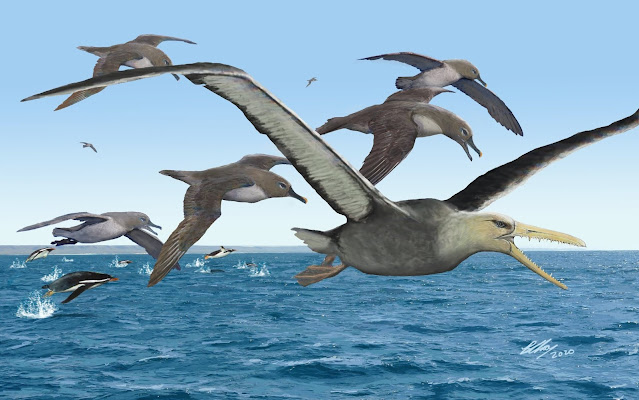

Antarctica yields oldest fossils of giant birds with 21-foot wingspans
Artist's depiction of ancient albatrosses harassing a pelagornithid -- with its fearsome toothed
beak - as penguins frolic in the oceans around Antarctica 50 million years ago
[Credit: Brian Choo]

Called pelagornithids, the birds filled a niche much like that of today's albatrosses and traveled widely over Earth's oceans for at least 60 million years. Though a much smaller pelagornithid fossil dates from 62 million years ago, one of the newly described fossils -- a 50 million-year-old portion of a bird's foot -- shows that the larger pelagornithids arose just after life rebounded from the mass extinction 65 million years ago, when the relatives of birds, the dinosaurs, went extinct. A second pelagornithid fossil, part of a jaw bone, dates from about 40 million years ago.


"Our fossil discovery, with its estimate of a 5-to-6-meter wingspan -- nearly 20 feet -- shows that birds evolved to a truly gigantic size relatively quickly after the extinction of the dinosaurs and ruled over the oceans for millions of years," said Peter Kloess, a graduate student at the University of California, Berkeley.


The last known pelagornithid is from 2.5 million years ago, a time of changing climate as Earth cooled, and the ice ages began.


Kloess is the lead author of a paper describing the fossil that appears this week in the open access journal Scientific Reports. His co-authors are Ashley Poust of the San Diego Natural History Museum and Thomas Stidham of the Institute of Vertebrate Paleontology and Paleoanthropology at the Chinese Academy of Sciences in Beijing. Both Poust and Stidham received their Ph.Ds from UC Berkeley.


Birds with pseudoteeth


Pelagornithids are known as 'bony-toothed' birds because of the bony projections, or struts, on their jaws that resemble sharp-pointed teeth, though they are not true teeth, like those of humans and other mammals. The bony protrusions were covered by a horny material, keratin, which is like our fingernails. Called pseudoteeth, the struts helped the birds snag squid and fish from the sea as they soared for perhaps weeks at a time over much of Earth's oceans.


Large flying animals have periodically appeared on Earth, starting with the pterosaurs that flapped their leathery wings during the dinosaur era and reached wingspans of 33 feet. The pelagornithids came along to claim the wingspan record in the Cenozoic, after the mass extinction, and lived until about 2.5 million years ago. Around that same time, teratorns, now extinct, ruled the skies.


The birds, related to vultures, "evolved wingspans close to what we see in these bony-toothed birds (pelagornithids)," said Poust. "However, in terms of time, teratorns come in second place with their giant size, having evolved 40 million years after these pelagornithids lived. The extreme, giant size of these extinct birds is unsurpassed in ocean habitats,""
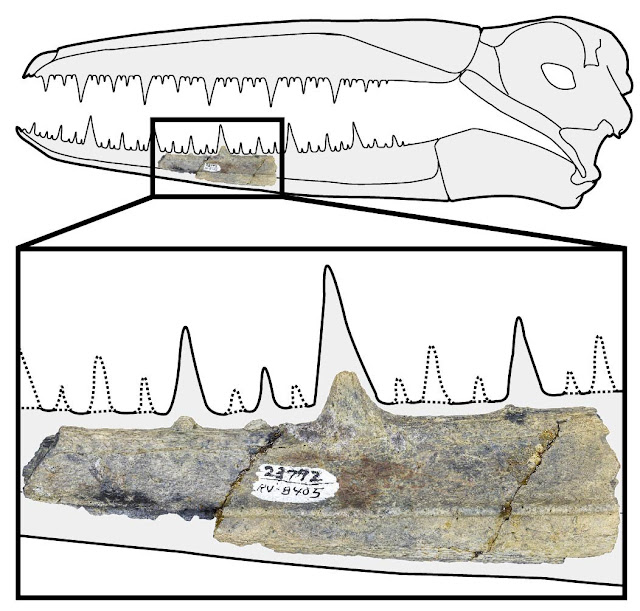

Antarctica yields oldest fossils of giant birds with 21-foot wingspans
This five-inch segment of fossilized jaw, which was discovered in Antarctica in the 1980s, dates
 from 40 million years ago. The skull of the bird would have been about two feet long, while
 the pseudoteeth, which were originally covered with horny keratin, would have been up
to an inch long. At this scale, the bird's wingspan would have been 5 to 6 meters,
or some 20 feet [Credit: Peter Kloess/UC Berkeley]

The fossils that the paleontologists describe are among many collected in the mid-1980s from Seymour Island, off the northernmost tip of the Antarctic Peninsula, by teams led by UC Riverside paleontologists. These finds were subsequently moved to the UC Museum of Paleontology at UC Berkeley.


Kloess stumbled across the specimens while poking around the collections as a newly arrived graduate student in 2015. He had obtained his master's degree from Cal State-Fullerton with a thesis on coastal marine birds of the Miocene era, between 17 million and 5 million years ago, that was based on specimens he found in museum collections, including those in the UCMP.


"I love going to collections and just finding treasures there," he said. "Somebody has called me a museum rat, and I take that as a badge of honor. I love scurrying around, finding things that people overlook."


Reviewing the original notes by former UC Riverside student Judd Case, now a professor at Eastern Washington University near Spokane, Kloess realized that the fossil foot bone -- a so-called tarsometatarsus -- came from an older geological formation than originally thought. That meant that the fossil was about 50 million years old instead of 40 million years old. It is the largest specimen known for the entire extinct group of pelagornithids.


The other rediscovered fossil, the middle portion of the lower jaw, has parts of its pseudoteeth preserved; they would have been up to 3 cm (1 inch) tall when the bird was alive. The approximately 12-cm (5-inch-) long preserved section of jaw came from a very large skull that would have been up to 60 cm (2 feet) long. Using measurements of the size and spacing of those teeth and analytical comparisons to other fossils of pelagornithids, the authors are able to show that this fragment came from an individual bird as big, if not bigger, than the largest known skeletons of the bony-toothed bird group.


A warm Antarctica was a bird playground


Fifty million years ago, Antarctica had a much warmer climate during the time known as the Eocene and was not the forbidding, icy continent we know today, Stidham noted. Alongside extinct land mammals, like marsupials and distant relatives of sloths and anteaters, a diversity of Antarctic birds occupied the land, sea and air.
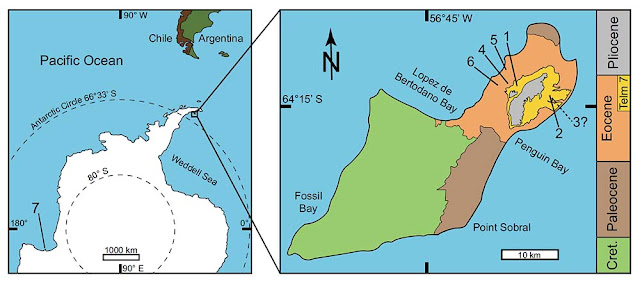

Antarctica yields oldest fossils of giant birds with 21-foot wingspans
Seymour Island, near the northernmost point of the Antarctic peninsula, has yielded a wealth
of fossils, including parts of giant birds like the pelagornithids and the smaller ancestors
of today’s albatross, not to mention scads of penguins. The UCMP fossils described
in the new study came from points 1 and 6 [Credit: Peter A. Kloess et al. 2020]

The southern oceans were the playground for early penguin species, as well as extinct relatives of living ducks, ostriches, petrels and other bird groups, many of which lived on the islands of the Antarctic Peninsula. The new research documents that these extinct, predatory, large- and giant-sized bony-toothed birds were part of the Antarctic ecosystem for over 10 million years, flying side-by-side over the heads of swimming penguins.

"In a lifestyle likely similar to living albatrosses, the giant extinct pelagornithids, with their very long-pointed wings, would have flown widely over the ancient open seas, which had yet to be dominated by whales and seals, in search of squid, fish and other seafood to catch with their beaks lined with sharp pseudoteeth," said Stidham. "The big ones are nearly twice the size of albatrosses, and these bony-toothed birds would have been formidable predators that evolved to be at the top of their ecosystem."


Museum collections like those in the UCMP, and the people like Kloess, Poust and Stidham to mine them, are key to reconstructing these ancient habitats.


"Collections are vastly important, so making discoveries like this pelagornithid wouldn't have happened if we didn't have these specimens in the public trust, whether at UC Riverside or now at Berkeley," Kloess said. "The fact that they exist for researchers to look at and study has incredible value."


Author: Robert Sanders | Source: University of California - Berkeley [October 27, 2020]


Support The Archaeology News Network with a small donation!


Monday, October 26, 2020

Irregular appearances of glacial and interglacial climate states


During the last 2.6 million years of Earth's climate has altered between glacial and interglacial states. As such, there have been times in which the transition between the two climate states appeared with either regular or irregular periodicity. AWI researcher Peter Kohler has now discovered that the irregular appearance of interglacials has been more frequent than previously thought. His study makes a significant contribution to our understanding of Earth's fundamental climate changes.


Irregular appearances of glacial and interglacial climate states
Credit: Pixabay

In order to understand human beings' role in the development of our current climate, we have to look back a long way, since there has always been climate change - albeit over vastly different timescales than the anthropogenic climate change, which is mainly due to the use of fossil fuels over the past 200 years. Without humans, for millions of years, climate altered between glacial and interglacial states over periods of many thousands of years, mainly because of the Earth's tilt which changes by a few degrees with a periodicity of 41,000 years. 


This in turn changes the angle at which the sun's rays strike Earth - and as such the energy that reaches the planet, especially at high latitudes in summer. However, there is strong evidence that during the course of the last 2.6 million years, interglacials have repeatedly been 'skipped'. The Northern Hemisphere - particularly North America - remained frozen for long periods, despite the angle of the axial tilt changing to such an extent that more solar energy once again reached Earth during the summer, which should have melted the inland ice masses. This means Earth's tilt can't be the sole reason for Earth's climate to alter between glacial and interglacial states.


In order to solve the puzzle, climate researchers are investigating more closely at what points in Earth's history irregularities occurred. Together with colleagues at Utrecht University, physicist Peter Kohler from the Alfred Wegener Institute (AWI) has now made a significant contribution towards providing a clearer picture of the sequence of glacial and interglacial periods over the last 2.6 million years. Until now, experts thought that, especially over the past 1.0 million years, glacial and interglacial periods deviated from their 41,000- year cycle, and that interglacial periods were skipped, as a result of which some glacial periods lasted for 80,0000 or even 120,000 years. "For the period between 2.6 and 1.0 million years ago, it was assumed that the rhythm was 41,000 years," says Peter Kohler. But as his study, which has now been published in the scientific journal Nature Communications, shows, there were also repeated irregularities during the period between 2.6 and 1.0 million years ago.


Kohler's study is particularly interesting because he re-evaluated a well-known dataset that researchers have been using for several years - the LR04 climate dataset - yet arrived at completely different conclusions. This dataset consists of a global evaluation of core samples from deep-sea sediments that are millions of years old, and includes measurements from the ancient shells of microscopic, single-celled marine organisms - foraminifera - that were deposited on the ocean floor. Foraminifera incorporate oxygen from the seawater into their calcium shells. But over millennia, the level of specific oxygen isotopes - oxygen atoms that have differing numbers of neutrons and therefore different masses - varies in seawater.


18O reveals what the world was like in the past


The LR04 dataset contains measurements of the ratio of the heavy oxygen isotope 18O to the lighter 16O. The ratio of 18O/16O stored in the foraminifera's shells depends on the water temperature. But there is also another effect that leads to relatively large amounts of 18O being found in the foraminifera's shells in glacial periods: when, during the course of a glacial period, there is heavy snowfall on land, which leads to the formation of thick ice sheets, the sea level falls - in the period studied, by as much as 120 m. Since 18O is heavier than 16O, water molecules containing this heavy isotope evaporate less readily than molecules containing the lighter isotope. As such, comparatively more 18O remains in the ocean and the 18O content of the foraminifera shells increases. 


Irregular appearances of glacial and interglacial climate states
Aerial view of the Beyond EPICA camp [Credit: Beyond EPICA]

"If you take the LR04 dataset at face value, it means you blur two effects - the influence of ocean temperature and that of land ice, or rather that of sea level change," says Peter Kohler. "This makes statements regarding the alternation of the glacial periods uncertain." And there is an additional factor: climate researchers mainly determine the sequence of glacial periods on the basis of glaciation in the Northern Hemisphere. But using 18O values doesn't allow us to say whether prehistoric glaciation chiefly occurred in the Northern Hemisphere or in Antarctica.


Computer model separates the influencing parameters


In an attempt to solve this problem, Kohler and his team evaluated the LR04 dataset in a completely different way. The data was fed into a computer model that simulates the growth and melting of the large continental ice sheets. What sets it apart: the model is capable of separating the influence of temperature and that of sea level change on the 18O concentration. Furthermore, it can accurately analyse where and when snow falls and the ice increases - more in the Northern Hemisphere or in Antarctica. "Mathematicians call this separation a deconvolution," Kohler explains, "which our model is capable of delivering." 


The results show that the sequence of glacials and interglacials was irregular even in the period 2.6 to 1.0 million years ago - a finding that could be crucial in the coming years. As part of the ongoing major EU project 'BE-OIC (Beyond EPICA Oldest Ice Core)', researchers are drilling deeper than ever before into the Antarctic ice. With the oldest ice core recovered to date, 'EPICA', they have 'only' travelled back roughly 800,000 years into the past. 


The ancient ice provides, among other things, information on how much carbon dioxide Earth's atmosphere contained at that time. With 'Beyond EPICA' they will delve circa 1.5 million years into the past. By combining the carbon dioxide measurements with Kohler's analyses, valuable insights can be gained into the relation between these two factors - the fluctuations in the sequence of glacials and the carbon dioxide content of the atmosphere. And this can help us understand the fundamental relationship between greenhouse gases and climate changes in Earth's glacial history.


Source: Alfred Wegener Institute for Polar and Marine Research [October 26, 2020]


Support The Archaeology News Network with a small donation!


Evolutionary pattern of genus Cribroconcha reveals survival strategy of ostracods from late Paleozoic


Ostracods are microcrustacea that first appeared in the Ordovician and are still developing today. Although tiny, they are the most abundant fossil records of the Arthropod phylum, and the most diverse species of Crustaceans, with about 65,000 living and fossil species.


Evolutionary pattern of genus Cribroconcha reveals survival strategy of ostracods from late Paleozoic
Distinct species of Cribroconcha Cooper, 1941
[Credit: NIGPAS]

Ostracods offer special insights into the characteristics of Devonian bio-environmental events. The ostracode genus Cribroconcha Cooper, 1941, is characterized by distinct morphological features, rapid evolutionary rates and wide geographical distribution, making it a potential index fossil for stratigraphic correlation and palaeoecological changes.


Recently, Dr. SONG Junjun from the Nanjing Institute of Geology and Paleontology of the Chinese Academy of Sciences (NIGPAS) and her colleagues made a thorough analysis of the evolutionary pattern of Cribroconcha lineages and the established biozones.


To date, 37 species and two subspecies (36 species plus one species that with two subspecies) of the ostracode genus Cribroconcha Cooper, 1941, have been reported worldwide, ranging in age from the Middle Devonian to the Early Permian with an acme during the Carboniferous.


Based on the geographical distribution and morphological characteristics of Cribroconcha, two evolutionary lineages (i.e., Lineage 1 and Lineage 2) were identified, which originated in the European and the Kazakhstan plates, respectively. Lineage 1 can be subdivided into three types: 1-A (stable type), 1-B (reshaped type) and 1-C (spiny type).


Evolutionary pattern of genus Cribroconcha reveals survival strategy of ostracods from late Paleozoic
Distribution of Cribroconcha species from the Late Devonian
to the Early Permia [Credit: NIGPAS]

The researchers found that 1-A stable type species inherited the characteristics of the early species totally. The 1-B reshaped type had elongate carapaces with subrectangular outline and subquadrate posterior border. Compared with the early species, species of this type only changed in the outline. The 1-C spiny type had the longest stratigraphic range and most species of this type had two sharp spines in the posterior border.


Most species of the 1-A and 1-B are benthic and living in a shallow marine environment. Some species of 1-C are nektonic and appeared in the deep cold waters from the shelf to the basin.


Only 1-C type species extended to the Early Permian, which implies the survival strategy of spiny type was successful. The morphological variability of spiny type is also related to the glacial event across the Devonian-Carboniferous boundary in the northern Gondwana, which generated cold deep water currents invading the palaeotethysian basins.


The research results were published in the journal Palaeogeography, Palaeoclimatology, Palaeoecology.


Author: Li Yuan | Source: Chinese Academy of Sciences [October 26, 2020]


Support The Archaeology News Network with a small donation!


Tracking the Himalayan history from the evolution of hundreds of frogs, lizards and snakes


The Himalaya are among the youngest and highest mountains in the world, but the exact timing of their uplift and origins of their biodiversity are still in debate. Generally, there are two hypotheses about the uplift process of the Himalaya. The "Stepwise Hypothesis" states that the Himalaya rose slowly from 1000-2500 m during 56-23 million years ago (Ma), before an additional rapid uplift to 4000 m during 23-19 Ma, and a final rise to the current average elevations (~5000 m) at around 15 Ma. Alternatively, recent hydrological and thermal evidences support that this region was probably not elevated to current elevation till mid-Pliocene ("Late Orogeny Hypothesis").


Tracking the Himalayan history from the evolution of hundreds of frogs, lizards and snakes
The Himalaya and representative amphibians and reptiles
[Credit: Science China Press]

Time-based records of biological processes can be informative about montane histories and environmental changes. Various hypotheses about Himalayan origins can be tested using phylogenetic information and estimates of the timing of biological speciation events. To address the question about the timing of the Himalaya uplift, we carried out field work across the Himalaya to collect samples of amphibians and reptiles. The Himalayan region encompasses multiple countries and has many access challenges, so sampling across the entire region is difficult, which has inhibited integrative studies of the origin of the Himalayan biota.


Combining 14 time-calibrated phylogenies of Himalayan-associated amphibian and reptile families involving 85 genera and 1628 species, we estimated times of divergence among 183 species that occur in the Himalaya. We identified 230 biogeographic events related to the Himalayan species. The dynamics of in situ diversification and dispersal rates remained essentially parallel across the Cenozoic. Both the in situ diversification rate, as well as the dispersal rate into the Himalaya, fit the Stepwise Hypothesis for the origin of this mountain range. In contrast, our estimates of origination and peak diversification are not consistent with the late-uplift hypothesis.


Tracking the Himalayan history from the evolution of hundreds of frogs, lizards and snakes
Biotic assembly through time of herpetofauna in the Himalaya. (a): The rates of in situ diversification
 and dispersal of the Himalayan herpetofauna through time (smoothed across 5 Ma windows).
Dispersal indicates "dispersal into the Himalaya." MDivE = maximal number of observed
 in situ diversification events per Ma. MDisE = maximal number of observed dispersal events
per Ma. Ambiguous events are separately listed. (b): Dispersal events from adjacent regions
 into the Himalaya (smoothed across 5 Ma windows). MDisE = maximal number
of observed dispersal events per Ma [Credit: Science China Press]

The rapid Himalayan uplift and associated intensified South Asia Monsoon not only promoted a pulse of uplift-driven in situ diversification, but also affected the rates of biotic interchange. Biotic interchange was restricted by the lack of a moist environment that is required by many reptiles and amphibians. In contrast, an expanded tropical forest belt is thought to have persisted between the Himalaya and Southeast Asia since the middle Miocene, which likely accounts for the high dispersal rates between these two regions.


This work has important implications about the assembly process of Himalayan herpetofauna and its conservation. Our analyses show a deep-rooted origin of Himalayan herpetofauna originating in the Paleocene, but with rapid diversification in the Miocene.


The study is published in the National Science Review 2020.


Source: South China Press [October 26, 2020]


Support The Archaeology News Network with a small donation!